
Today. AI can implement a new feature or fix a nuanced bug, which used to take you days, before your morning coffee even cools down. This shift creates a quiet panic for software engineers and managers. If AI handles the coding, what exactly are we getting paid for?
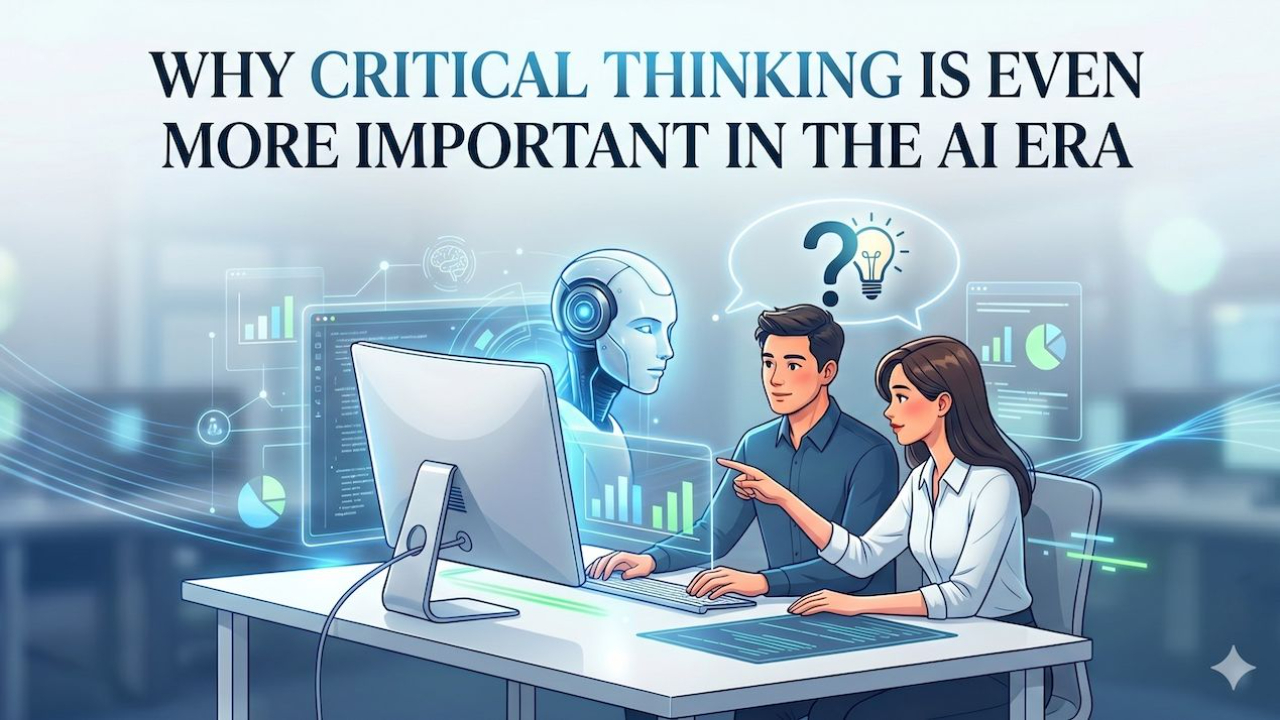
Here is the reality: non-technical skills like critical thinking have always been important, but they just became absolutely existential for your career in the AI era. As Pablo Picasso famously said, "Computers are useless. They can only give you answers." In a world overflowing with instant answers, the true value lies in knowing what to ask. Many people say AI is different and it is intelligent, autonomous, and can self-improving. In my opinion, for quite some time, there are some human capabilities that are are hard for AI to match. The last mile towards AGI/ASI will feel longer than it sounds.
Let us break down why your career growth now depends on how you think, rather than just what you type.
AI Can Do the Heavy Lifting, But Needs Oversight
Before, there was huge demand for people who could reliably follow guidelines or execute established patterns. Now, those tasks are being done by AI. AI actually does it faster, more reliably, and more consistently than human without any emotional and behavioral support. But AI lacks judgment. It needs strict oversight on decision making. Your job is no longer just typing code; your job is evaluating if the AI's output actually solves the business problem securely and efficiently. Critical thinking is one of the key ingredients to achieve that.
Once I used Claude Code to build a new feature to enable users to quickly turn an exploratory PySpark application into a production grade data pipeline. AI did an amazing job designing and implementing it, which worked beautifully. I then asked it it to ensure this fits majority of of the users' workflow and usage pattern. It confidently defended its design eloquently. I spent some time to talk to some users and the engineers who work closely with the users to support them. Claude Code clearly made some wrong assumptions, which lead to sub-optimal design.
Learning Is Fast, But You Need Good Questions
Historically, we followed and adapted to learning paths like school systems, training courses, and rigid career ladders. Now, AI adapts to us instead. We are entirely in control of our learning and growth. AI can teach you a new framework in a weekend, but critical thinking and good questions decide how far we could go. If you ask generic questions, you get generic career results. The old learning system ensures it produces large quantity of people that meets minimum bar to do the job. The new learning system in the AI era will create a "K-shaped" result. Those who are waiting to be fed will be left in the dust. Those who have genuine curiosity, critical thinking, and self-motivation will go like a rocket. The information barrier collapsed and AI enables them to learn 100x faster without school and courses.
Expanding Across Disciplines Demands Deep Thinking
AI enables you to become a one-person powerhouse. A software engineer can now easily expand across disciplines like coding, design, product management, sales, or customer engagement. However, to excel in new disciplines you are not familiar with, just skimming the surface will lead to failures. Critical thinking and asking great questions to dive deep are the keys to really grasp these new domains.
Final Words
To summarize, AI is a powerful engine, but our critical thinking is the steering wheel. We are transitioning from a world that rewarded consistent task execution to one that rewards problem framing and strategic oversight. The engineers and managers who will land their dream jobs tomorrow are the ones refining their thinking today. What is one complex problem you are facing at work right now, and how could you reframe the question you are asking about it?
Subscribe to Newsletter
Get bi-weekly curated articles, tips, and resources for career success delivered to your inbox:


